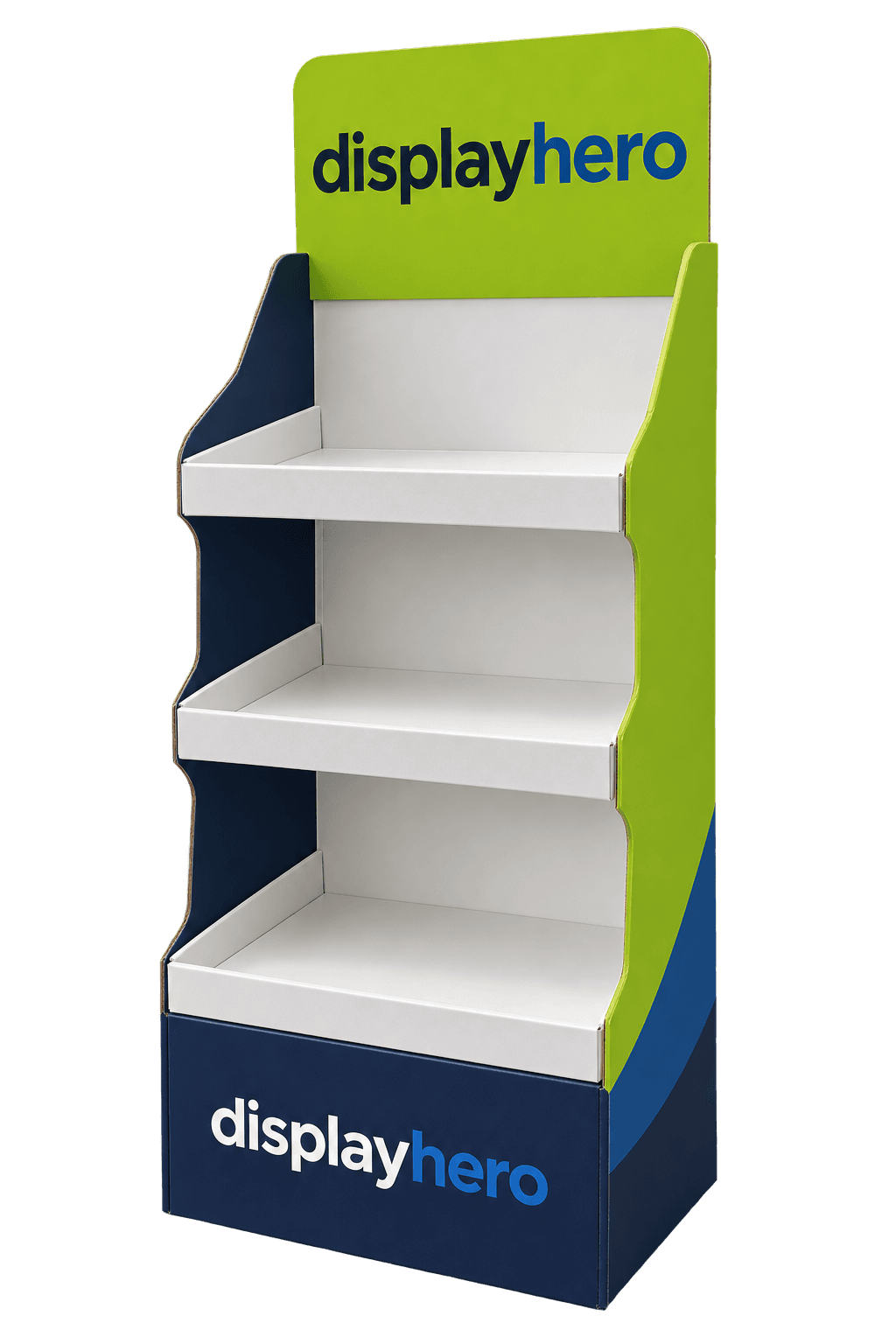
A point-of-sale (POS) display is a physical stand that presents products in a store. A floor display suits a freestanding placement; a counter display presents smaller items on an existing surface. A pallet display combines product presentation with a pallet base. The retailer's approved space, product packaging and in-store handling determine the choice. This guide covers merchandise stands, not digital screens.
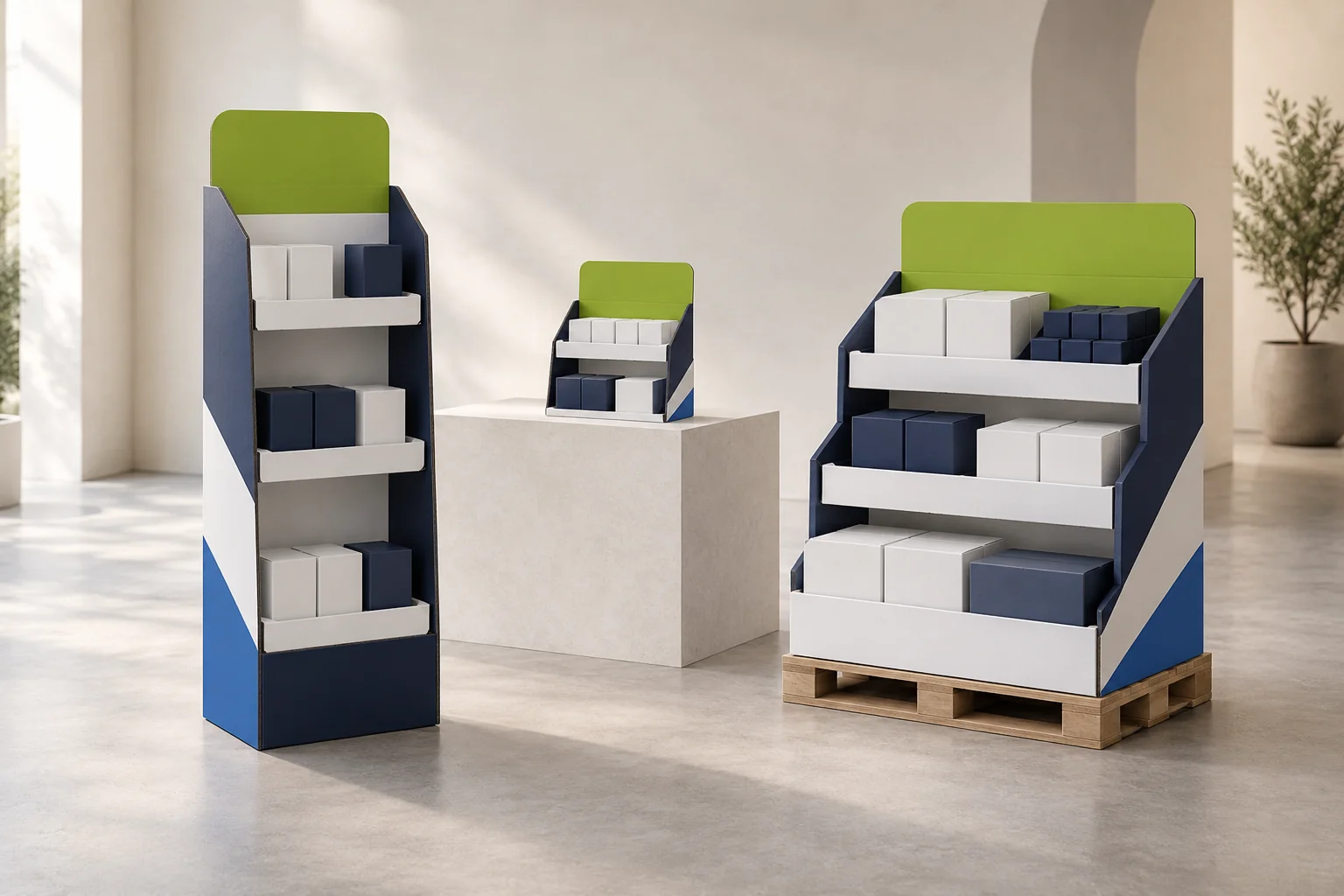
Floor, counter and pallet displays compared
| Format | When to consider it | Check first |
|---|---|---|
| Floor display | Freestanding secondary placement with shelves or hooks. | Footprint, height, access and weight per level. |
| Counter display | Compact products on a checkout, counter or consultation desk. | Usable counter space, sightlines and product access. |
| Pallet display | Promotional placement built on a pallet base. | Accepted pallet format, total height and goods-receiving rules. |
Define where the POS display will stand
Start display selection with the width, depth and permitted height at the actual location. Photograph the space and note which sides customers can approach. Consider aisles, sightlines to other products and room to replenish stock. Obtain the retailer's placement approval before construction is finalized.
A floor display needs its own floor space. A counter display uses an existing surface but should leave room for service, payment and eye contact. A pallet display makes sense when the pallet base and delivery method suit the store; the pallet format must be agreed.
See the freestanding format in our floor displays.
Packaging and product access determine the display format
For a POS display, record the dimensions and weight of the retail-ready unit, including its packaging. Check whether customers will take products upright, lying flat or from hooks. Cartons and bottles can stand on shelves; packaging with a suitable hanging feature may suit hooks. An open dump bin can work for robust packaged promotional items.
List every product variant. Packs with different widths change how a shelf can be filled. Fragile items may need dedicated holders or dividers. Allow gripping space so a customer can remove one pack without pulling neighbouring products or the shelf along with it.
For smaller retail packs on existing surfaces, consider: Counter displays.
Plan stock capacity, loading and replenishment separately
Stock capacity means the number of products in one display. Order quantity means the number of displays. Record these separately. For each level, state how many units it holds and their combined weight.
Calculation example: twelve packs weighing 250 g each create a product load of 3 kg on one shelf. This calculation is not an approved load rating. The shelf, joints, weight distribution and stability must suit the complete structure. During sampling, also check access when the display is partly empty and decide who replenishes it and when.
Match the POS display material to its intended use
Floor, counter and pallet describe placement, not material. For example, a floor display can use corrugated board or be planned as a longer-term wood and metal structure. A short campaign and a regularly replenished brand area have different needs for finishes, cleaning and replaceable branding.
Choose the format and intended use first. Then compare materials and construction against the actual loads. An attractive finish alone does not establish a load rating or an economical service life.
For the material decision, read Compare cardboard, wood, metal and acrylic.
Clarify assembly and delivery before requesting a display
Should the display arrive flat-packed, preassembled or already filled with products? Identify the person or team assembling it and any requirements for instructions, tools and disposal of transport packaging. For a pallet solution, discuss goods receiving, handling routes and total height.
A product description, intended location and approximate display quantity are enough for an initial inquiry. Add photographs, pack dimensions and your preferred date where available. Record unknown details as open points; sampling and the detailed requirements are then agreed for the project.
Collect the details for the next step with the Display brief checklist.
Sources and scope
- FEFCO · Shelf Ready Packaging ↗
Background on retail presentation, handling and replenishment. The selection guidance and calculation example are editorial recommendations.