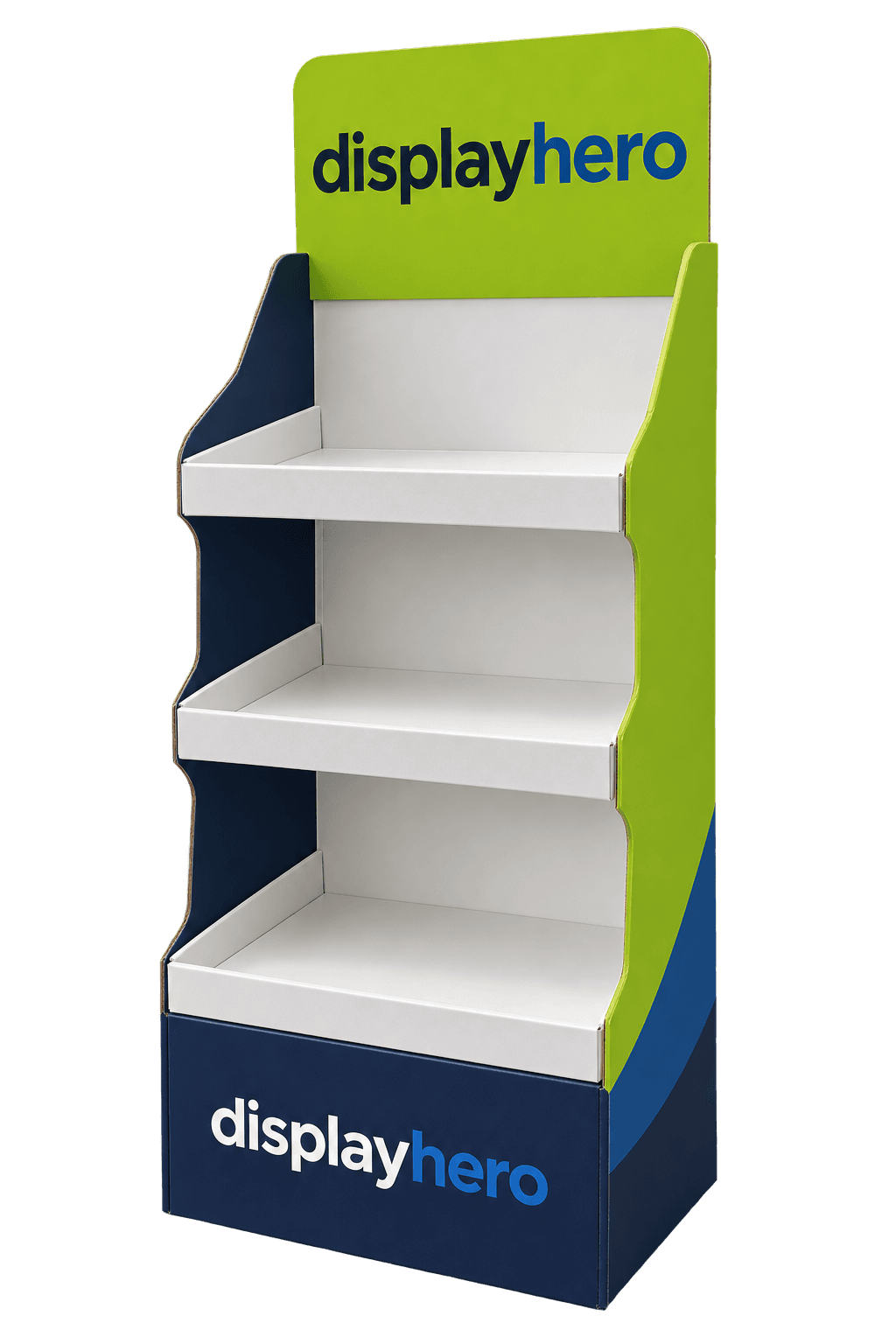
A display brief describes the product, placement and requirements for a custom merchandise stand. A product description, intended location and approximate display quantity are enough for a first inquiry. Dimensions, weight, your preferred date and photographs make planning more specific. You do not need a finished construction or print-ready design at this stage; identify any open points explicitly.
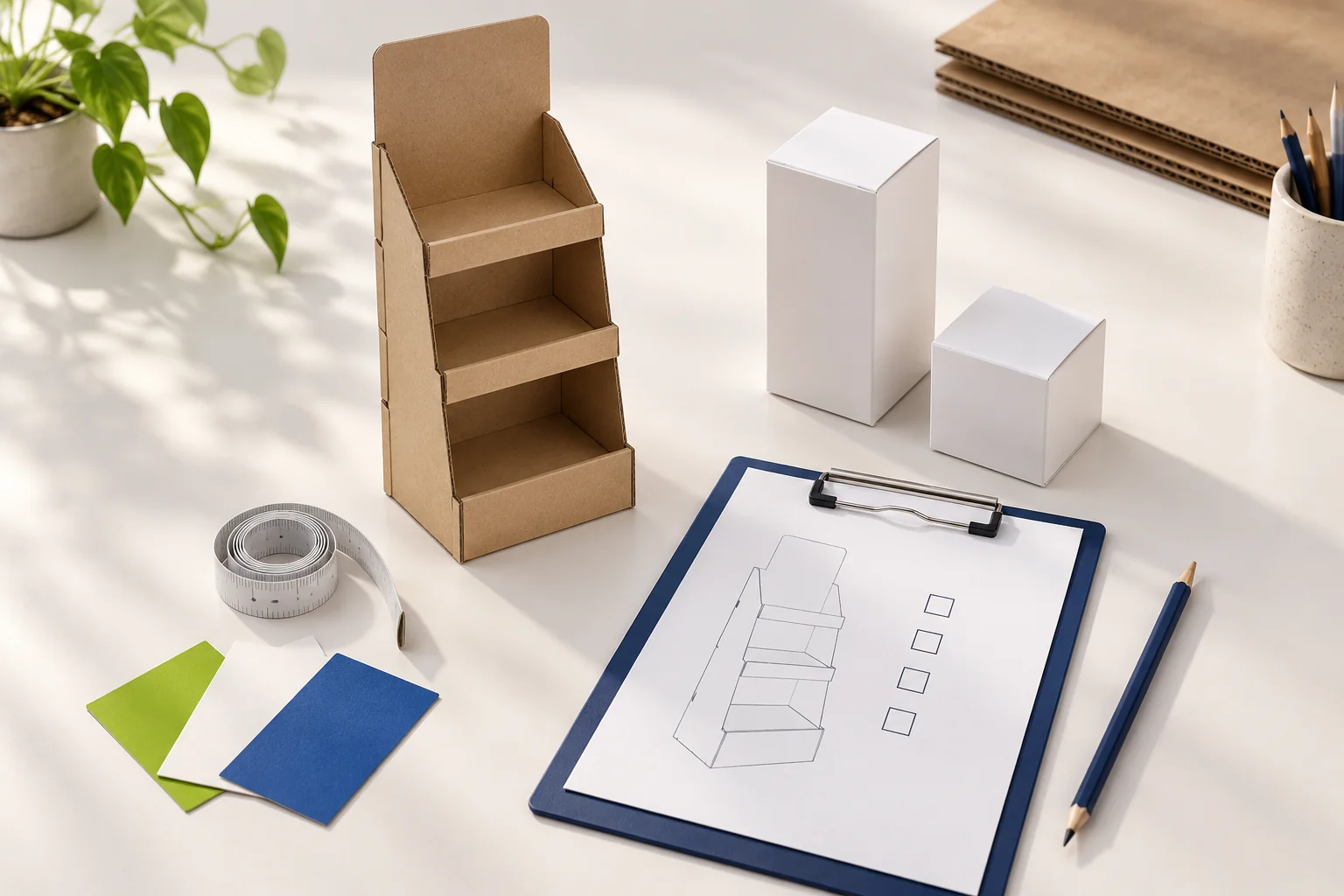
Display inquiry checklist
| Detail | What to prepare | Why it helps |
|---|---|---|
| Product | Packaged unit: width × depth × height, weight, photo and variants. | Plan holders, shelves and product access. |
| Location | Counter, floor or pallet; available space and retailer rules. | Define the format and permitted external dimensions. |
| Stock | Product quantity and arrangement per display. | Check space, loading and replenishment. |
| Display quantity | Required number of displays and possible split quantities. | Cost production and quote options. |
| Design | Logo, colour guidelines, existing concepts or design work needed. | Agree printing and finishes. |
| Delivery | Destination, preferred date, flat-packed / assembled / prefilled. | Plan packaging, assembly and timing. |
| Project scope | Intended use period, budget range, sampling needs and open questions. | Identify priorities and decisions still needed. |
1. Describe the product and placement in the display brief
Measure the retail-ready packaging, not just the unpackaged product. State the order of dimensions, such as width × depth × height in millimetres, and add the weight per unit. Front and side photographs help explain shape and access. For hanging products, include the hanging feature.
Describe the available display space separately from product dimensions. Include height limits and retailer requirements. If the format is undecided, describe the location; you do not need to choose a model prematurely.
For help choosing the format: Compare floor, counter and pallet formats.
2. Separate stock capacity, display quantity and budget
Record products per display and the number of displays ordered as two separate figures. If several variants will be presented together, sketch their arrangement. State whether all displays are identical or need different printed graphics or product assortments.
A budget range helps focus the options. Specify whether it is per display or for the whole project and whether samples, packaging and shipping should be included. Minimum quantities and practical production runs are reviewed for the individual project.
For the main cost factors, see How a display quote is prepared.
3. Prepare design, sampling and approval
Existing logos, brand guidelines, a sketch or a description of the desired appearance are enough for an initial discussion. Identify missing design elements. Final artwork must match the approved construction and agreed print requirements; a general design file is not yet production approval.
Identify who will approve dimensions, product fit and design. If a sample is needed, describe its purpose, such as checking fit, assembly or print appearance. Sample scope, cost and timing are agreed. Naming a contact early helps with questions and approvals.
For the individual steps, see Project process and sampling.
4. Specify the destination, preferred date and assembly
Distinguish the preferred goods-receiving date from the start of the sales campaign. Specify the delivery country and postal code, plus a central destination or planned distribution to several sites. State whether the display should arrive flat-packed, assembled or prefilled, and who will fill it.
A realistic schedule includes concepts, questions, sampling, approval, production and transport. A requested date becomes an agreed delivery date only after review. Record retailer-specific receiving conditions, such as time slots, pallet requirements or labelling.
For further logistics details, see Shipping and delivery.
5. Example of an initial display brief
Fictional planning example: We are planning 100 identical counter displays for packaged cosmetics. Each display should hold twelve packs. A pack measures 45 × 35 × 120 mm (width × depth × height) and weighs 150 g. The available surface is 300 × 250 mm; we still need to confirm the maximum height with the retailer. The display will be used for six weeks. We have a logo and colour guidelines, but the layout is undecided. We would like flat-packed delivery to one address in Germany and filling on site. We will provide the preferred date, postal code and budget later.
These details describe requirements, not a checked construction, minimum order quantity or delivery commitment. Your first inquiry can include open questions in the same way. Add photographs or files where useful and identify any estimates.
You can start with the information already available: Start your display inquiry.