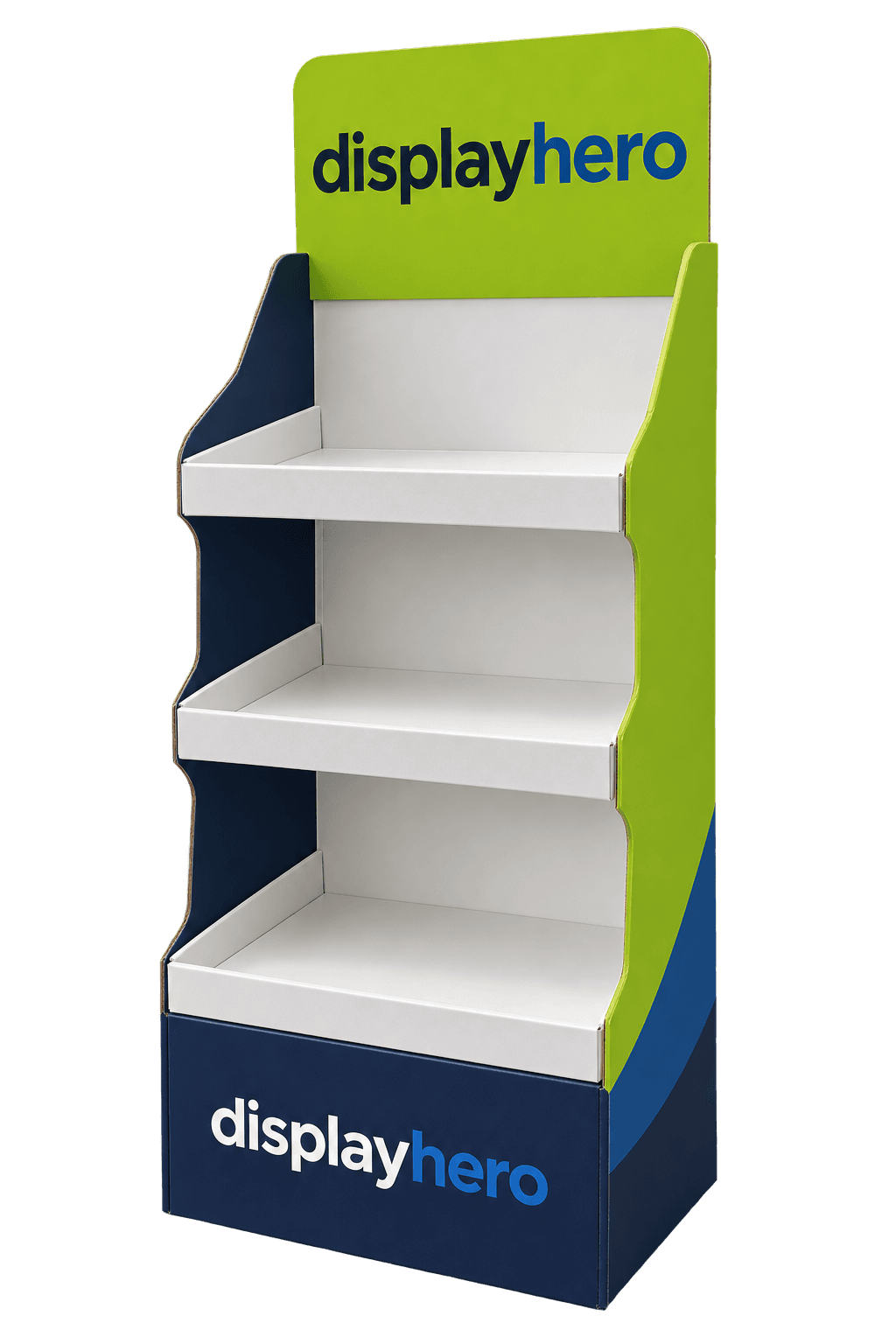
Material selection for a POS display depends on intended service life, product weight, finish and handling. Cardboard and corrugated board can suit printed promotional stands; wood and metal can suit longer-term structures. Acrylic is an option for transparent product holders and shelves. Combining materials can also make sense. A material name alone does not establish a load rating, service life or environmental performance.
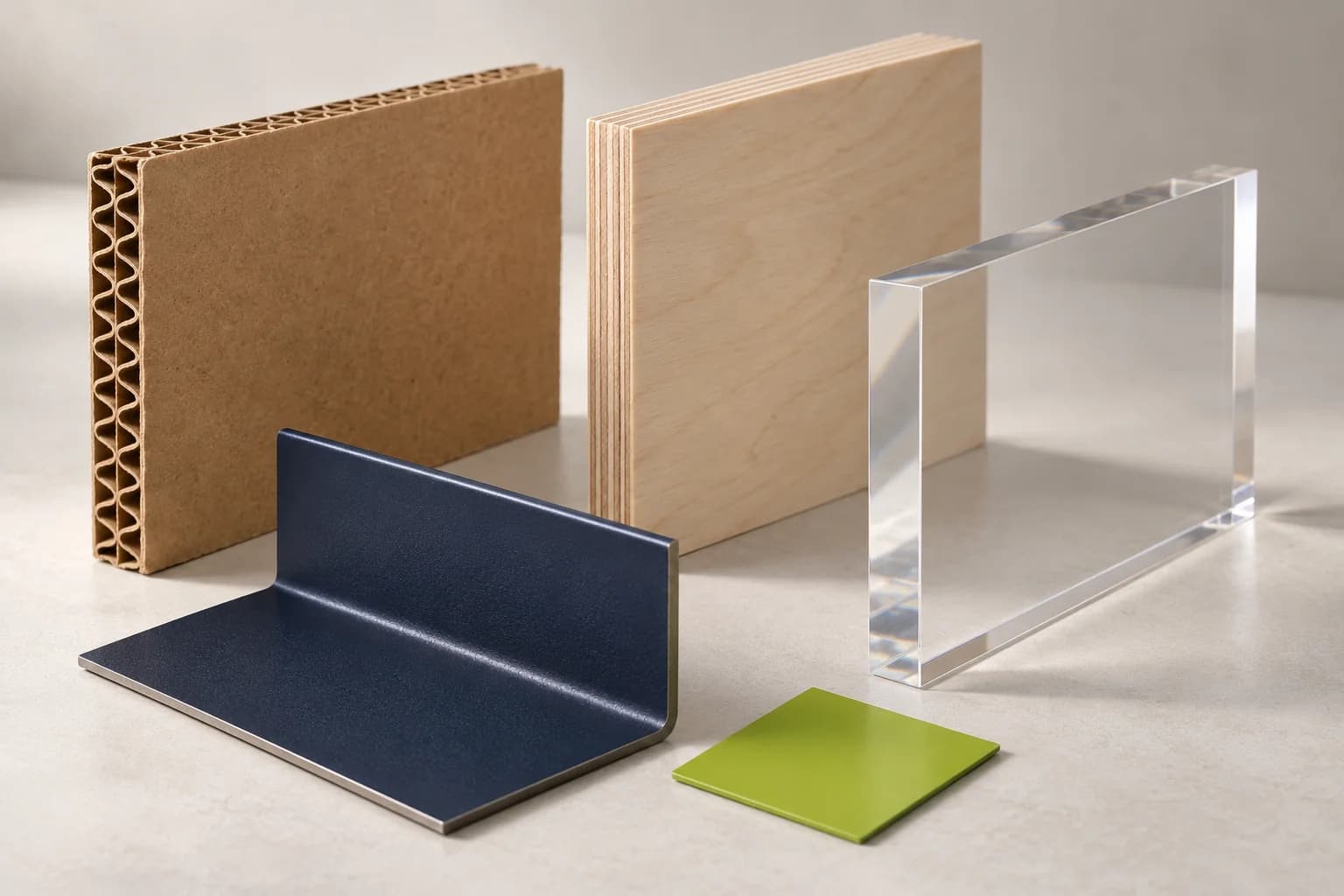
Four display materials compared
| Material | Possible application | Planning checks |
|---|---|---|
| Cardboard / corrugated board | Printed promotional displays and foldable structures. | Construction, reinforcement, moisture and transport. |
| Wood / wood-based panels | Longer-term shelving and exposed wood finishes. | Panel type, edges, joints and surface care. |
| Metal | Frames, hooks, perforated panels and structural parts. | Alloy, section, connections and coating. |
| Acrylic | Transparent shelves, holders and product presenters. | Thickness, unsupported span, edges and cleaning. |
Cardboard and corrugated board for printed POS displays
Cardboard and corrugated board are different paper-based materials. Corrugated board has one or more fluted paper layers bonded to liners. For a display, the flute structure, paper grade, folds and reinforcements matter alongside the visible thickness.
A printed, foldable structure can be a useful starting point for a limited campaign. Clarify how often it will be moved and whether moisture during storage, transport or cleaning matters. Load claims must refer to the actual construction; FEFCO describes different tests for corrugated board, not a universal display load rating.
Wood and wood-based panels for longer-term displays
A wooden display can use solid wood or wood-based panels. Plywood, MDF and other panels are not interchangeable specifications. Plywood consists of bonded layers; MDF is a fibreboard. Exposed edges, fixings and surfaces differ accordingly.
Describe the intended appearance and in-store use. Should the wood grain remain visible, should the surface be painted, or will branding need changing later? For repeated use, consider connection points, cleaning and replaceable parts during design.
Metal for display frames, shelves and hooks
Metal is a material category, not a complete construction specification. Frames, perforated panels, shelves and hooks require an agreed metal, thickness, section shape and connection method. A slim appearance does not establish a particular load capacity.
State whether the display will be moved or dismantled frequently. Discuss its own weight, accessible edges, floor contact and surface requirements. Include the desired coating and colour in the brief; suitability for cleaning or a damp environment must match the specification offered.
Acrylic for transparent product presenters
Acrylic here means PMMA plastic, not mineral glass. Transparent shelves and holders can keep the product visible. Material thickness, unsupported span, edge finishing and the type of joint are important design inputs.
Describe which surfaces customers touch and how the display will be cleaned. Agree cleaning products and protective packaging for the actual material specification. Transparency alone does not establish scratch resistance or load capacity. Combinations with wood or metal also require suitable interfaces and fixings.
One possible application is shown in our product presenters.
Assess loading on the complete display
The required loading follows from product weight, quantity and distribution across shelves or hooks. Provide these details for each level. Assessment should cover the connections and stability of the whole display as well as an individual shelf.
A sample with representative products helps assess access, replenishment and handling. Agree the checks and how approval will be recorded beforehand. A concept image cannot establish allowable loads or guaranteed properties.
For the review process, see Sampling and approval.
Consider material costs, reuse and disposal
Compare quotes for the same intended use and scope. Construction, printing, quantity, assembly and shipping affect the cost alongside the material. A lower material price does not automatically make a solution more economical.
For repeated use, plan for replacing graphics and worn parts. Separable materials and local collection routes matter for eventual disposal. Recycling or certification claims should relate to the actual specification and available evidence. A material family alone does not establish an overall sustainability advantage.
For further options, explore Materials and fabrication options.
Then record your requirements: Checklist for your inquiry.
Sources and scope
- FEFCO · Testing methods & recommendations ↗
Background on separate tests of corrugated-board properties. This does not establish testing or certification of a Displayhero product.
- Gesamtverband Deutscher Holzhandel · Holzwerkstoffplatten ↗
Definitions of plywood, MDF and other wood-based panels. The display application suggestions are editorial planning guidance.